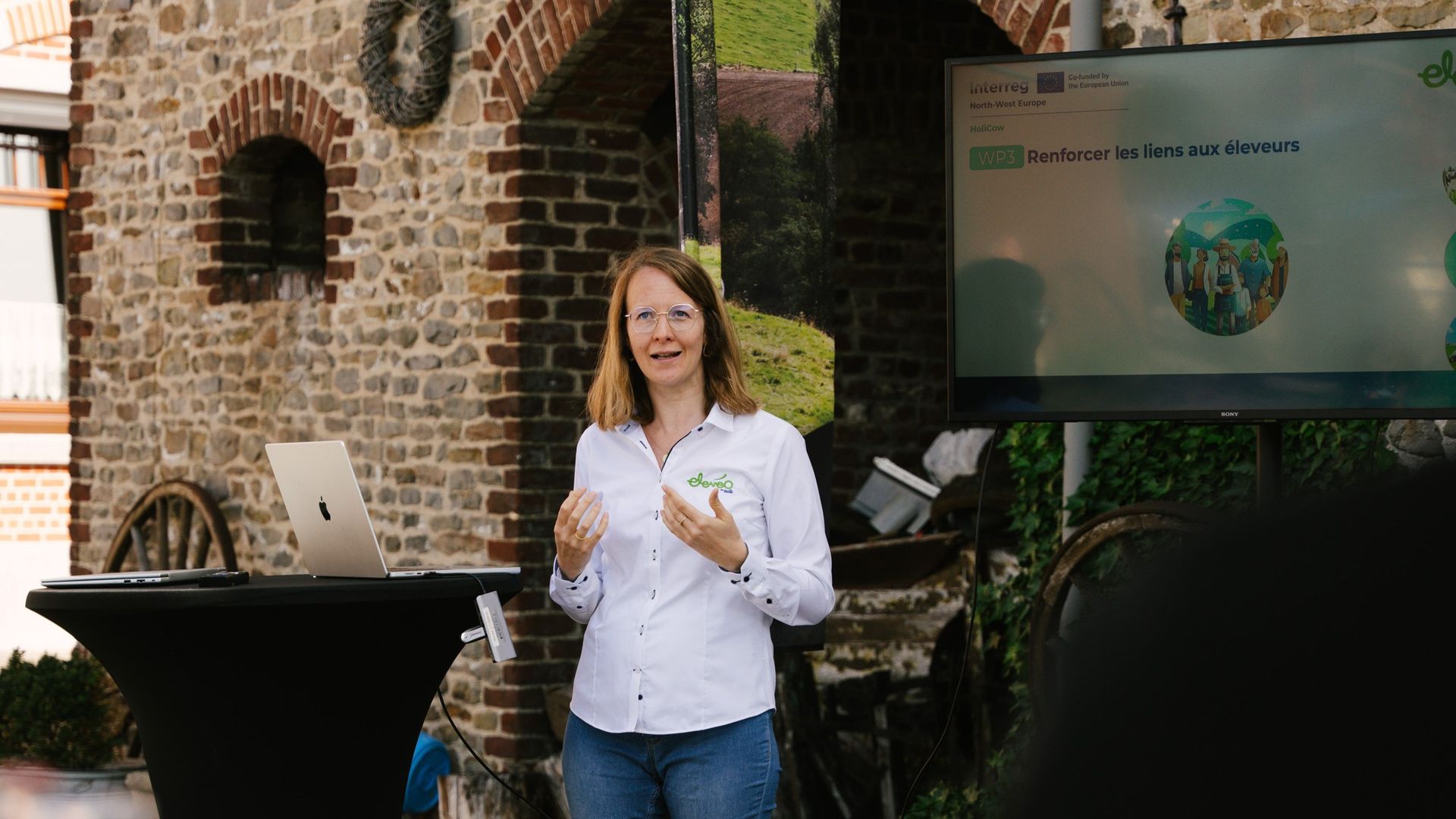
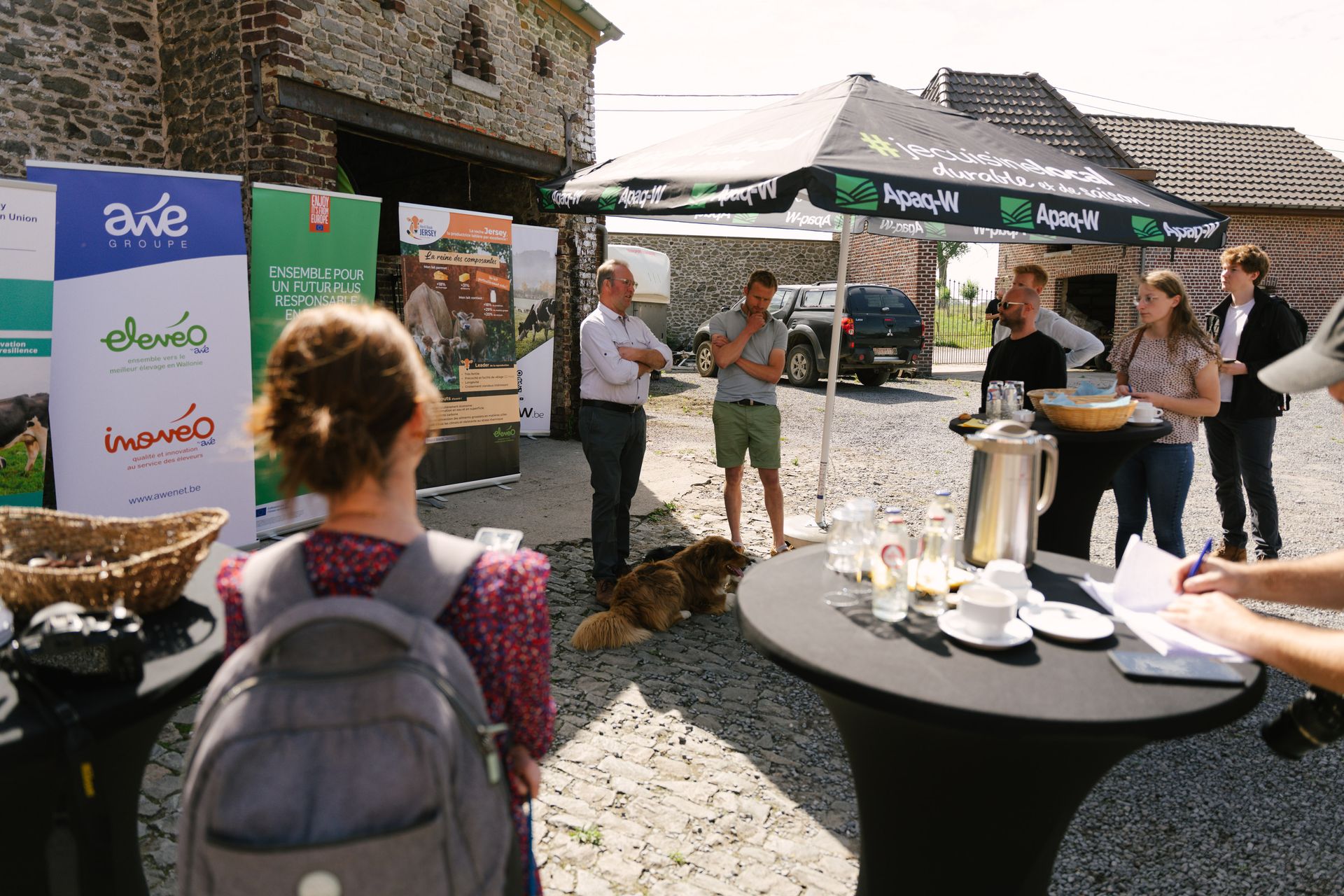
The Walloon Breeders' Association (awé) and the Walloon Agency for the Promotion of Quality Agriculture (Apaq-W) presented the next stage of the European HoliCow project at Ferme du Tordoir in Péruwelz, managed by Dominique and Romain Lecas. The initiative transforms milk recording data into a practical decision-support tool for small and medium-sized dairy farms across six European countries, including Belgium.
Ultimately, the HoliCow dashboard will enable dairy farmers to detect health and fertility issues more quickly, while also identifying animals with greater energy and nitrogen efficiency, using data already collected through routine milk recording.
"We are not carrying out any additional analyses. Based on the milk recording analyses already performed, we provide farmers with a wide range of new indicators. For example, we can estimate milk processing potential, the environmental footprint of milk, feed efficiency, signs of disease or inflammation, fertility, and much more," explains Julie Leblois, HoliCow Project Coordinator and Scientific Researcher at Elevéo.
More than 60 million milk spectra
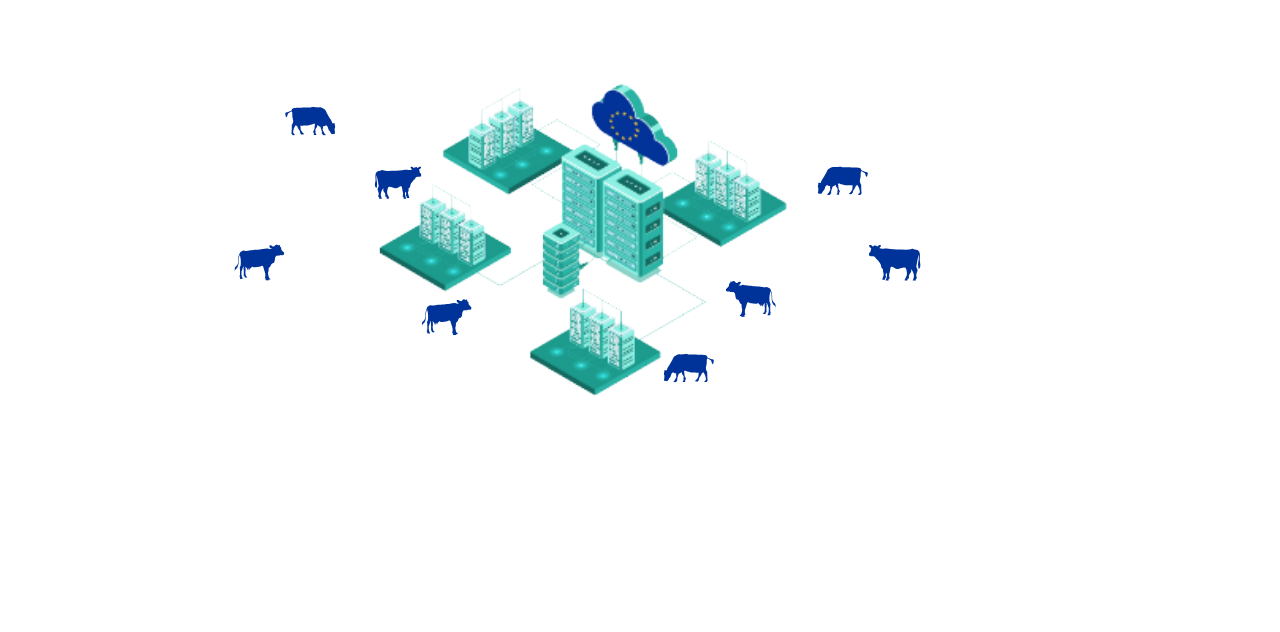
The technological foundation of the project is based on mid-infrared (MIR) milk spectral analysis, combined with prediction models developed through previous research projects and enriched with herd data from more than 5.6 million cows across the six partner countries. The objective is to present all this information in a simple, user-friendly dashboard accessible through the WALLeSmart platform.
The project has now entered the validation phase, during which the dashboard is being tested on pilot farms. This crucial step allows researchers to compare scientific predictions with on-farm reality, for example, verifying whether a cow predicted to be at risk of disease actually became ill.
Scientific validation on pilot farms
Ferme du Tordoir, a mixed crop and dairy farm located in Péruwelz, is one of the Walloon pilot farms participating in the project.
"Milk recording is an essential tool because it provides individual animal data rather than relying solely on bulk tank milk information," explains Dominique Lecas.
This conviction led Dominique and his son Romain to join the project as a pilot farm.
"We are very interested in new technologies. We already receive data through CetoLait (ketosis) and DiversiLait (transformation), so it was a natural step for us to join the HoliCow project as a pilot farm."
Alongside the scientific work, extensive co-design sessions have been carried out with farmers to ensure the final tool is intuitive, practical and fully aligned with everyday farm management. Targeted alerts will draw farmers' attention to animals or indicators requiring action.
According to Romain Lecas, this directly addresses one of the main challenges of today's milk recording reports.
"The problem with current milk recording reports is that the results come in large tables. We receive five pages of data to analyse, and we don't always have the time to go through everything in detail. The HoliCow dashboard is much more intuitive: we can assess the status of our herd at a glance."
The farmers are particularly interested in the environmental indicators developed through the project.
"Globally, agriculture is increasingly under scrutiny regarding methane emissions. If we can access tools that not only help us reduce emissions but also demonstrate that the agricultural sector is making real progress, that's exactly what we need."
The farm also sees clear opportunities in the milk processing indicators.
"Another indicator that really interests us relates to milk processing. We process part of our milk into ice cream, butter and yoghurt. The information provided through HoliCow could help us make breeding decisions and adapt our herd management to further improve processing performance," says Romain.
The dairy sector is committed to more sustainable production
HoliCow is one of many
sustainability initiatives highlighted by Apaq-W, alongside projects led by
research organisations, advisory services, farmers' associations and dairy
processing companies. Through these initiatives, the Agency aims to showcase
the work being carried out across the dairy sector while inspiring all
stakeholders to continue driving sustainable innovation.
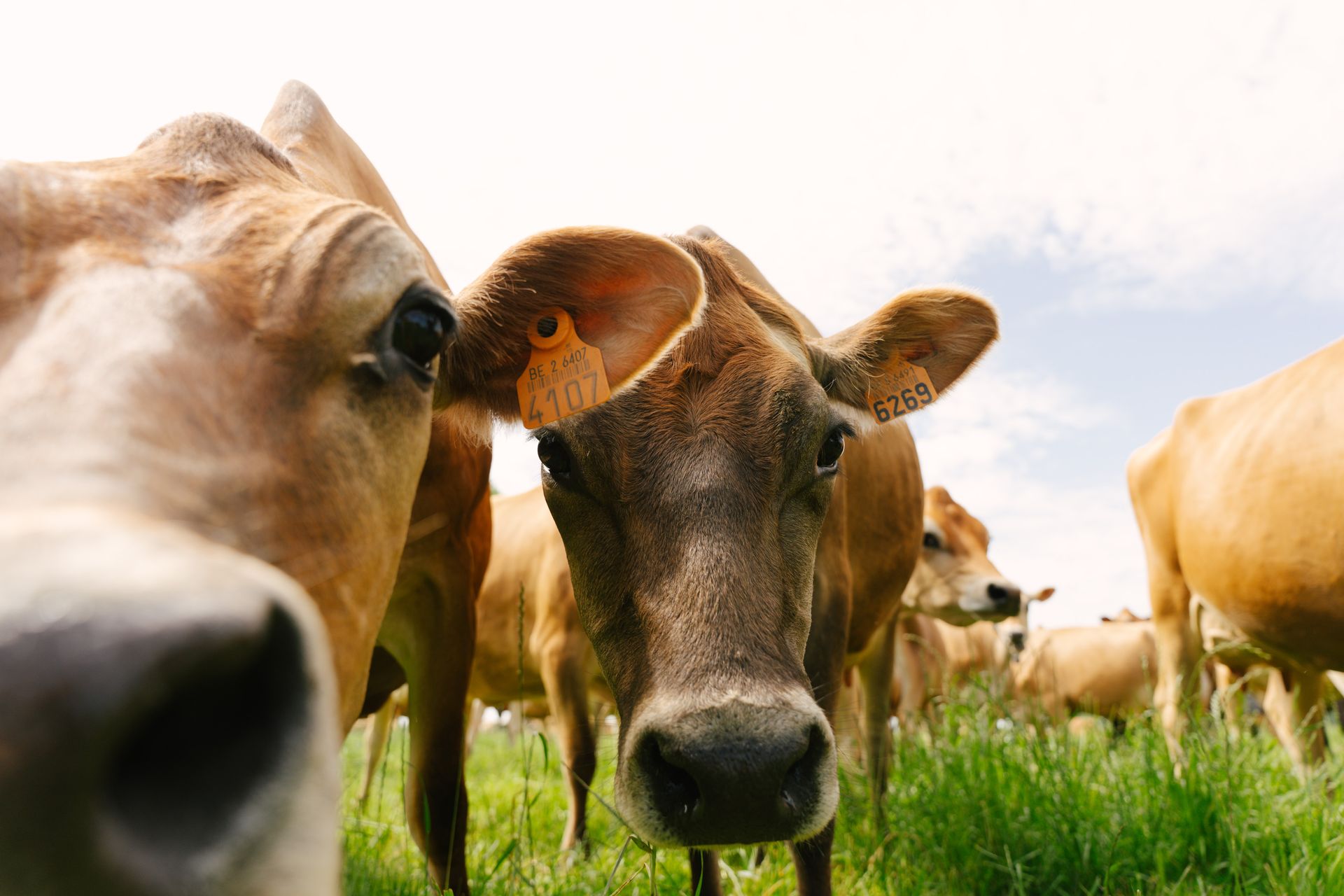
As Philippe Mattart, Managing Director of Apaq-W, explains:
"We believe the dairy sector's commitments reflect a genuine alignment between citizens' expectations and producers' actions. Sustainability is no longer just a concept: it has become a reality embedded in the practices of Walloon dairy farming, supported by engaged consumers and passionate producers."
Ferme du Tordoir
Managed by Dominique
Lecas and his son Romain, Ferme du Tordoir operates 30 hectares of grassland
surrounding the farm, where the cows graze throughout the grazing season. The
herd consists of 120 dairy cows, including 115 Jerseys, producing approximately
1.1 million litres of milk per year. Milking takes place in a 2×8 herringbone
parlour.
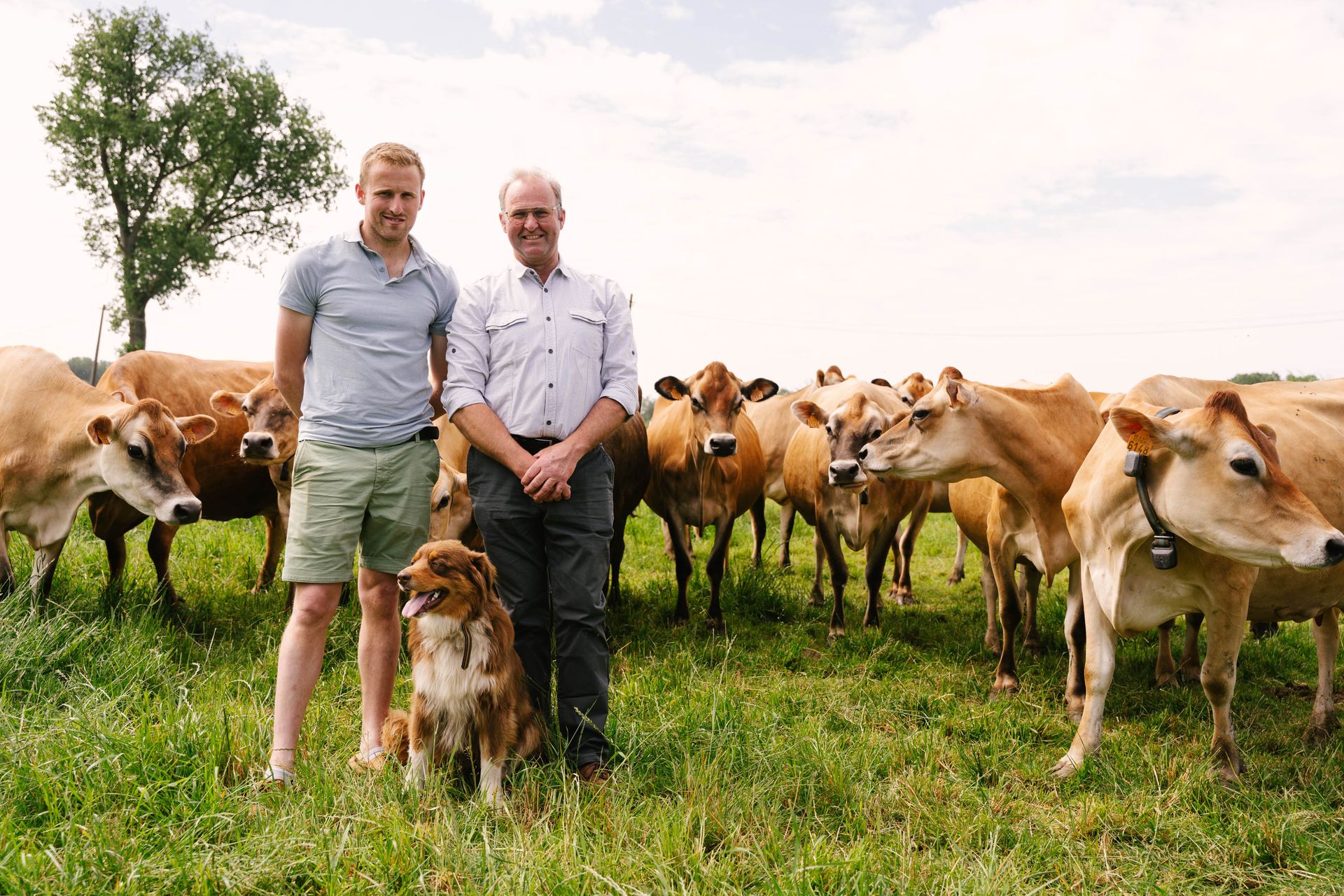
Originally dominated by Holstein cattle, the herd has gradually transitioned to the Jersey breed, chosen for its feed efficiency, ease of handling and particularly well-suited milk composition for dairy processing. Today, Dominique and Romain are strong advocates of the breed.
Rather than increasing herd size or milk production, they focus on investments that improve labour efficiency. For this reason, installing an automatic milking robot is not currently being considered, as it would complicate their grazing management system.
In addition to their dairy herd, Dominique and Romain also raise Belgian Blue cattle for the production of premium beef boxes sold directly to consumers.